Can AI build your restaurant's website?
It can build a good-looking first draft in minutes. What it cannot do on its own is find out how your guests search and book, decide which bookings need a conversation, connect your booking system and Google profile, test every route on real phones and keep improving from your numbers. That work decides whether a website takes bookings, and it is what we do.
- Written by
- Oskaras Margevicius, founder of Zoltrack
- Short answer
- AI builds the draft; the decisions make it work
- Do we use AI?
- Yes, to work faster. Every decision and change is checked by the founder
What one prompt gets you
Ask an AI website builder for a restaurant site and you get a layout, a hero photo, some menu headings, copy that could describe any restaurant and a Book button. It is quick and cheap, and for a placeholder or a venue on a very tight budget it can be enough. The tools get better every month.
What you do not get is anything the tool could not know from the prompt. A website earns bookings through a hundred small decisions about your venue, your guests and your team, and those come from research, not from a template.
What a prompt cannot know
How your guests actually choose
Students choose a house as a group, on a budget, on a phone. So the Stoke Student Homes site asks the questions a group asks itself, one at a time, shows how many houses each answer leaves before it is tapped, and if nothing fits opens a WhatsApp message to the owners with the answers already written. None of that comes from a prompt that says lettings website.
Which bookings need a conversation
At Akatuki, tables for up to 10 book online and are confirmed at once, while groups of 11 to 80 send one enquiry, because a group needs a conversation about a set menu, not a slot in a calendar. That split came from how the restaurant takes bookings, and it is why private dining enquiries now arrive with the details the team needs.
What your staff will use on a busy shift
Lucky Claw's staff change prices and party packages themselves, in a dashboard built for the few things they change most. A generated site gives you a page; it does not ask who will update it on a Saturday afternoon.
Where the money leaks
In Akatuki's Google Ads, each kind of search now has its own ad and page, and searches that cost money without bringing guests are blocked: other restaurants' names, other areas, jobs and delivery apps. Finding those takes reading the account, not writing a prompt.
The right tools, set up properly
A builder picks the platform, hosting and plug-ins for you. We choose them for the venue: a build that delivers every page fast and complete to a phone and to Google, hosting with security headers and monitoring, the booking provider you already use, and analytics that count booking clicks rather than visits. The domain, the hosting and the accounts are set up in your name, and the code is handed over.
The work around the website
- Your Google Business Profile, with its Book and Menu links pointing at the pages that answer them
- Your booking provider connected, and a route of its own for groups, parties, private hire and events
- Every page delivered as finished HTML with structured data, for Google, Bing and AI answer engines
- Every page and booking route checked on real phone screen sizes for speed and accessibility
- Booking and enquiry clicks measured with consent, and reported monthly with dates and sources
- The domain, hosting and accounts set up in your name, with monitoring and backups where supported
- A written scope before anything is built, and a private preview to check before anything goes live
- Checks on every change before it ships: the build, page titles and structured data, speed and accessibility
- Changes month after month, led by what your numbers show
How we use AI
We use AI tools where they make the work faster, from drafting code to checking it. They do not decide anything, and they do not choose or set up the tools around a website. The research, the plan, the design, the setup and every change that ships are checked by Oskaras, and every fact on a client's site comes from the client. If something breaks, you speak to the person who built it.
A builder, or a site built around your bookings?
A website builder, AI or not, is a fair choice on a tight budget when you take bookings one way. Here is the difference.
On a tight budget, a builder is fine. When bookings matter, go custom.
Plan a new websiteSites built from those decisions
Three sites, three kinds of business. Every number is from the client's own dashboard. Last refreshed 20 Nov 2026.
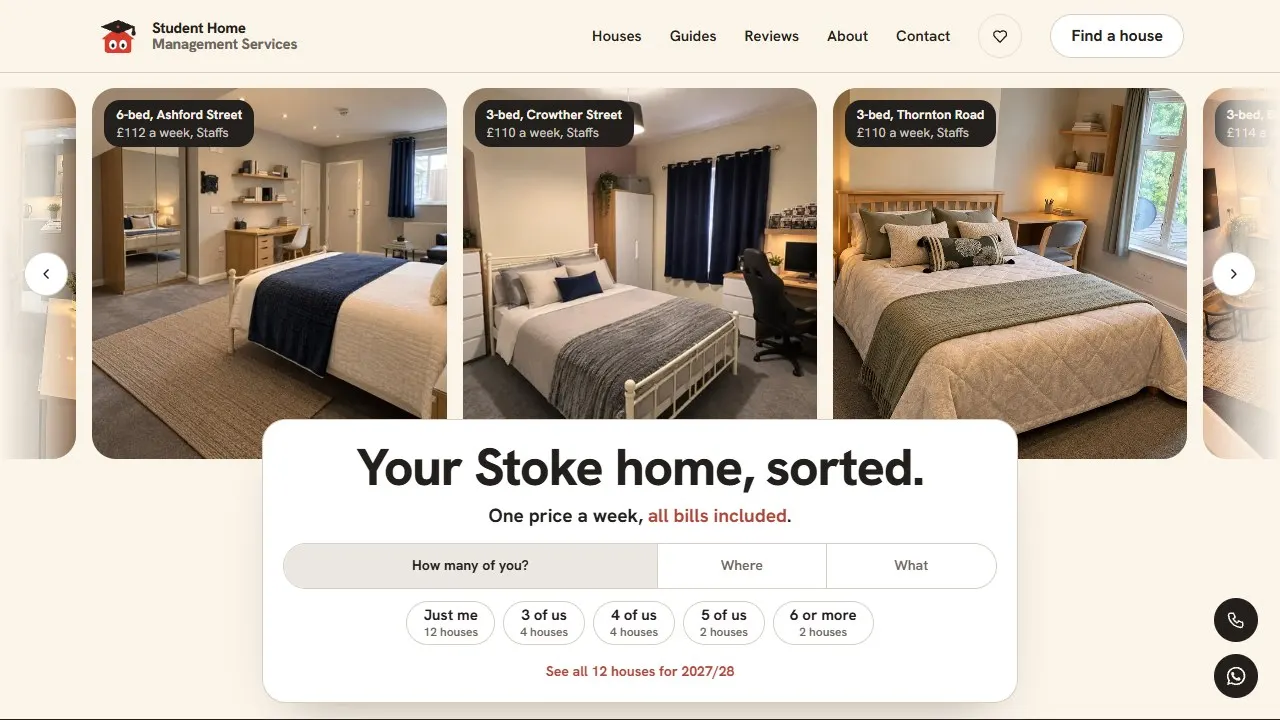
Student lettings, Stoke-on-Trent
Stoke Student Homes
The questions a group asks itself, one at a time, with live counts, ending in a viewing request.
See the Stoke Student Homes case study3.4xclicks from Google after the new site (33 to 113)Google Search Console, 21 Oct - 17 Nov 2026 vs the previous 28 days
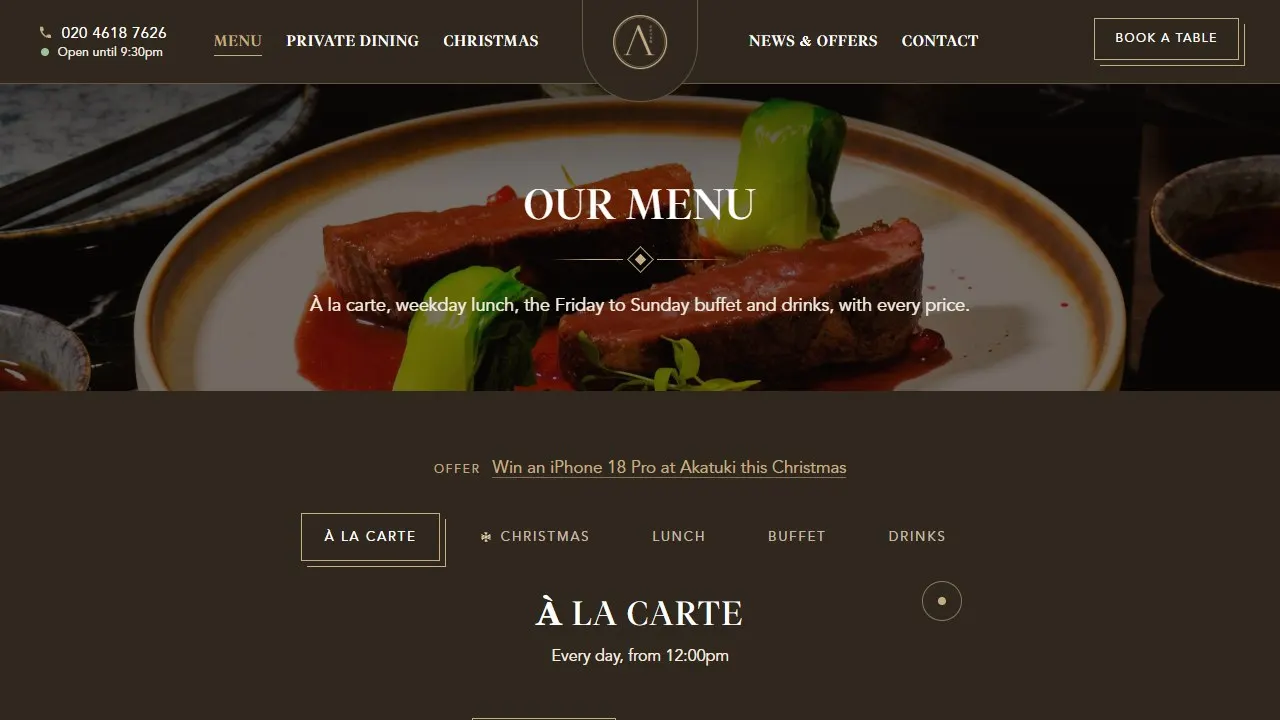
Japanese restaurant, Covent Garden
Akatuki
Tables online, one enquiry for groups of 11 to 80, and ads that stopped paying for the wrong searches.
See the Akatuki case study+31%table bookings from Google (143 to 187)Google Business Profile, September vs October 2026
72%cheaper per ad click, same daily budgetGoogle Ads, 3-9 Nov vs 10-16 Nov 2026
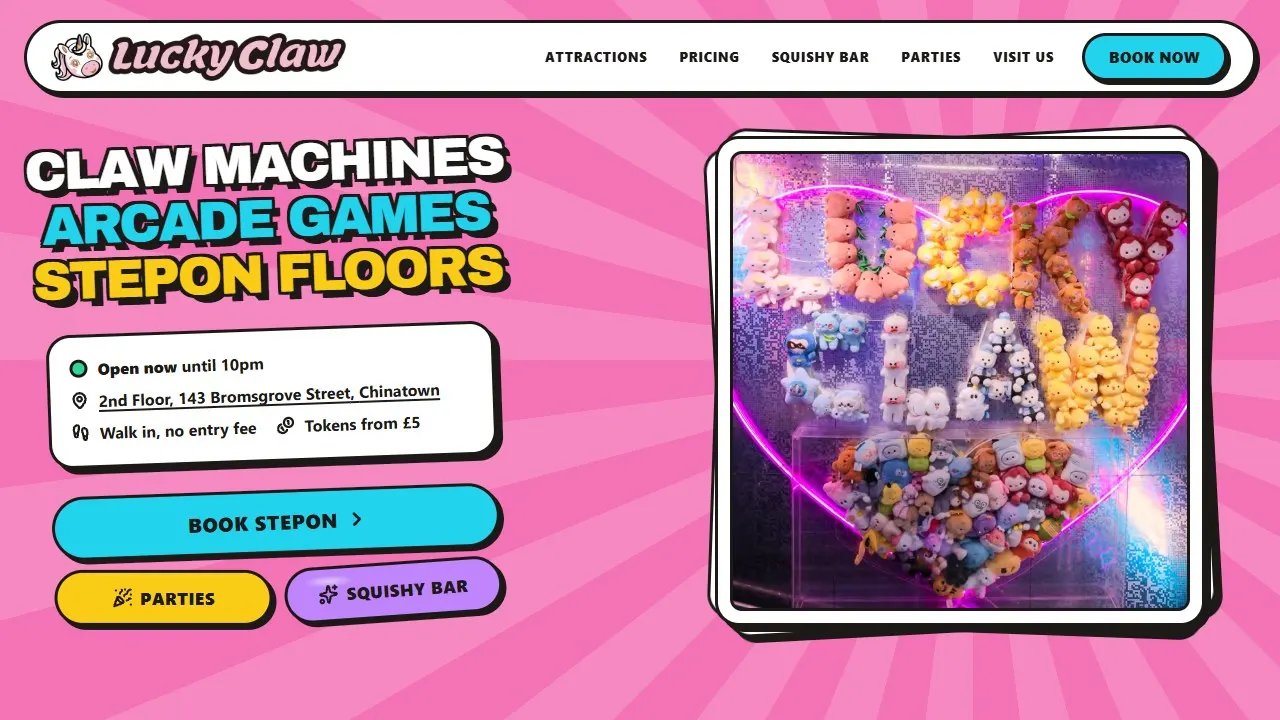
Arcade and party venue, Birmingham
Lucky Claw
StepOn booking in a panel over the page, party packages priced per child and a dashboard staff run.
See the Lucky Claw case study4,200clicks on Book in 30 days, from 2,500 peopleVercel Analytics, 21 Oct - 20 Nov 2026
Questions
Can AI build a restaurant website?
It can build a first draft quickly. A site that takes bookings also needs research into how your guests choose, a route for each kind of booking, your booking system and Google profile connected, testing on real phones and monthly changes from your own numbers.
Do you use AI to build websites?
Yes, where it makes the work faster, such as drafting and checking code. Every decision and every change that ships is checked by the founder, and every fact on a client's site comes from the client.
Is an AI-built website bad for Google?
Not because AI made it. What matters is whether each page loads fast, arrives as complete HTML with accurate structured data, answers what guests search for and is kept up to date. A quick draft usually needs that work added.
Is a builder enough for a small restaurant?
It can be, if you take bookings one way and have time to keep it current. When groups, private hire, events or several venues come in, a site built around how you take bookings usually pays for itself.